

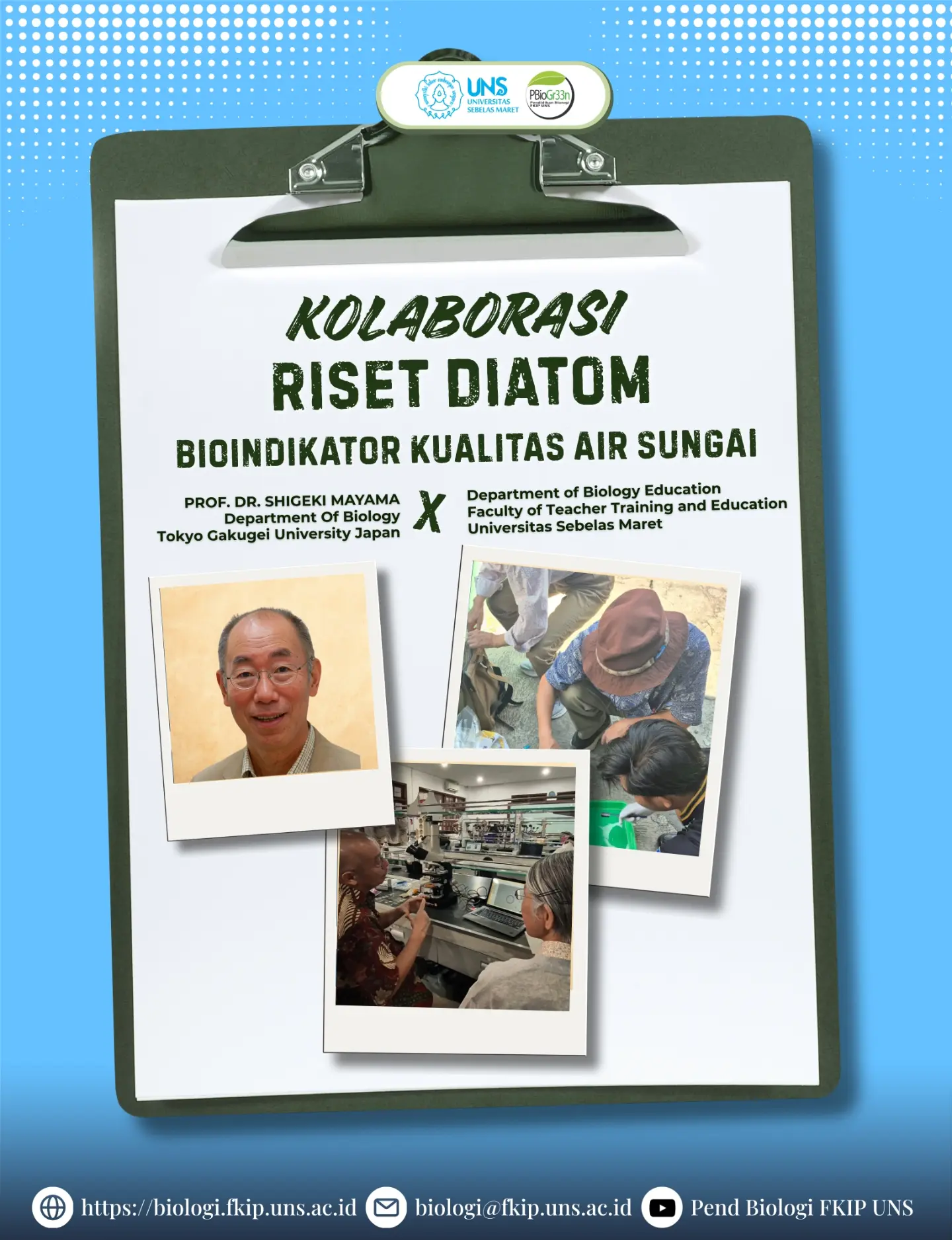
Surakarta, Indonesia — August 11, 2026. The Biology Education Study Program, Faculty of Teacher Training and Education (FKIP), Universitas Sebelas Maret (UNS), conducted a research collaboration with Prof. Dr. Shigeki Mayama from Tokyo Gakugei University, Japan, from August 6–11, 2026. The collaboration focused on the use of diatoms as bioindicators for assessing river water quality.
The research collaboration was carried out as part of ongoing water quality research in the Solo Raya region through the Biosystematics and Ecological Studies Research Group, led by Prof. Dr. Muzzaziyah, M.Si. The research involves six faculty members and 24 students from the Biology Education Study Program.
Learning Research from Field to Laboratory
The collaborative research provided students and lecturers with direct experience in the complete research process, from field preparation and sample collection to laboratory analysis and interpretation.
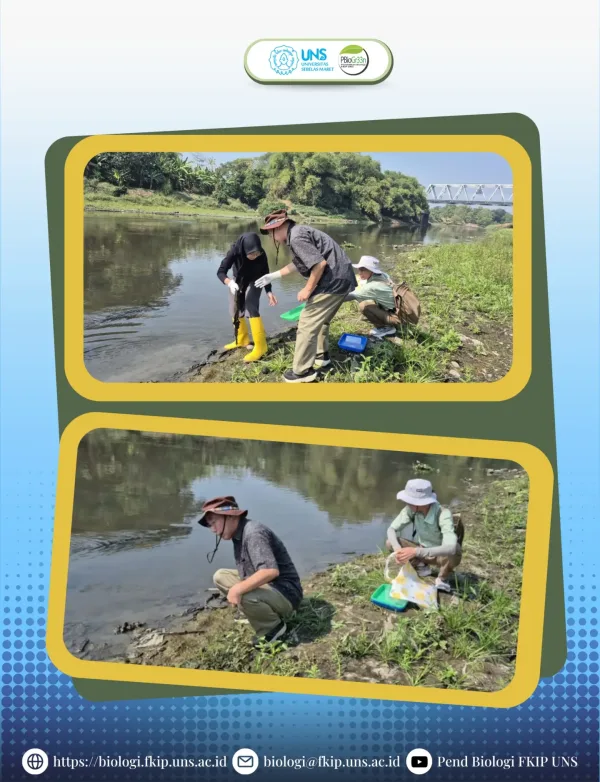
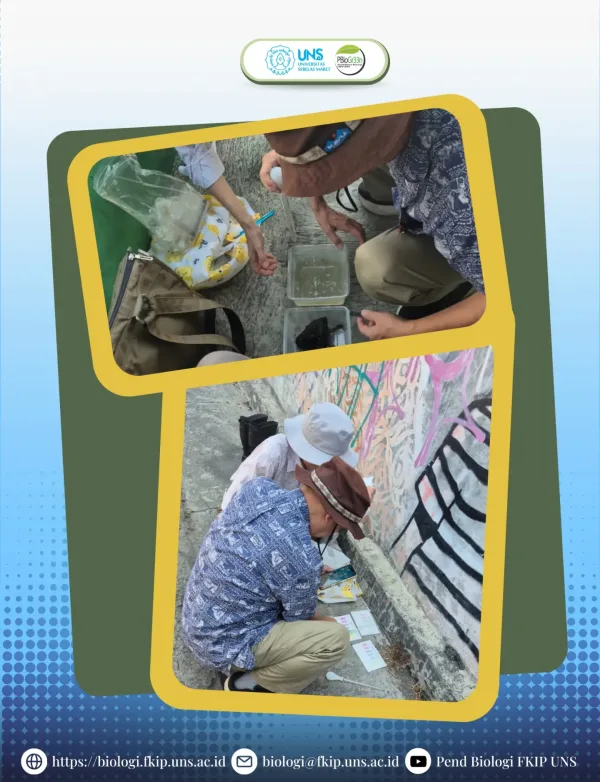
During field activities, participants learned how to collect diatom samples from rivers, document sampling locations, and measure relevant environmental parameters. The experience provided practical insight into how biological indicators can be combined with physical and environmental data to assess the condition of aquatic ecosystems.
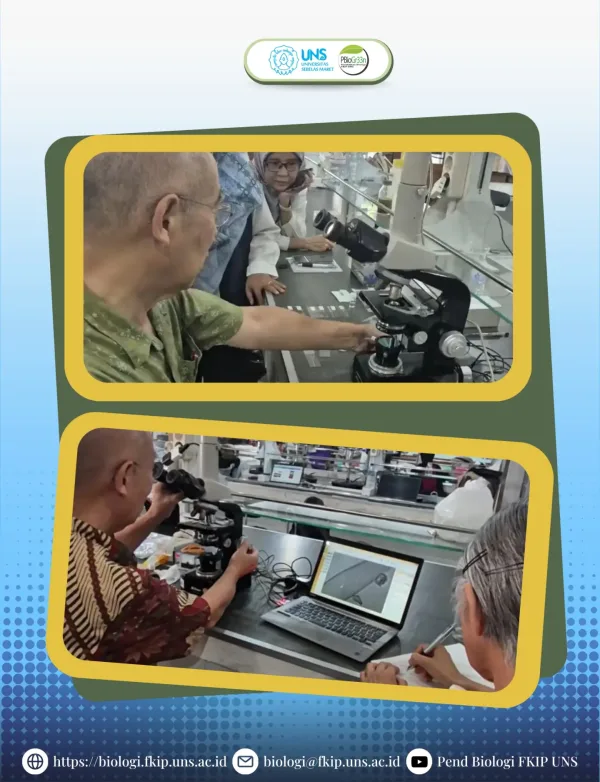
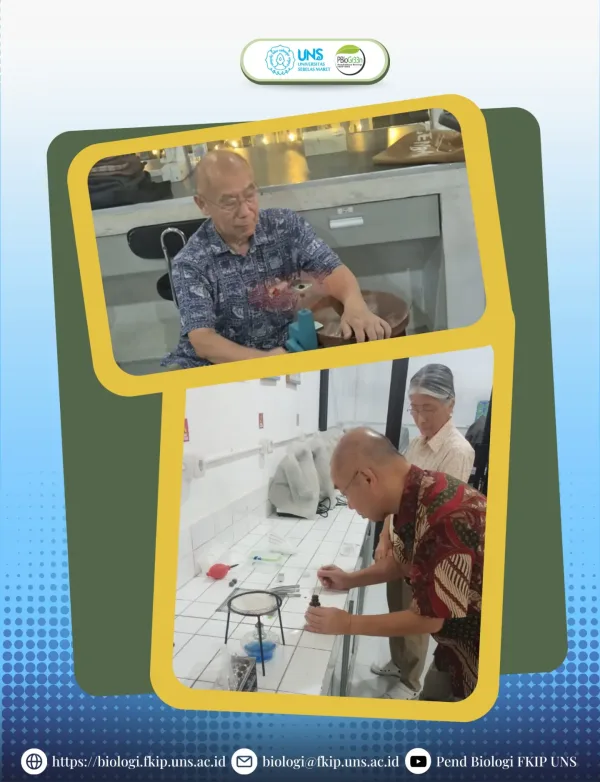
The research continued in the laboratory, where participants were introduced to sample preparation, microscopic observation, diatom identification, and data analysis. Prof. Mayama also shared practical guidance on the proper use of microscopes, enabling students and lecturers to improve their technical skills in microscopic observation and identification.
Through this field-to-laboratory approach, the collaboration provided a comprehensive research experience that connected ecological concepts with practical scientific methods.
Sharing Research Findings and Building Research Capacity
An important part of the collaboration was a discussion session involving lecturers and students of the Biology Education Study Program. Students had the opportunity to present their research results and findings from the collaborative activities, followed by discussion and feedback.
The session created an academic environment in which students could communicate scientific findings, discuss research challenges, and learn directly from an international researcher. It also strengthened the research culture within the program by encouraging students to actively participate in the scientific process rather than simply serve as research assistants.
The collaboration therefore contributed not only to the study of river water quality but also to the development of research competencies among students and lecturers, particularly in aquatic ecology, biosystematics, and environmental assessment.
Extending Research Collaboration to Teachers and Alumni
In addition to the research activities, Prof. Mayama conducted a workshop for Biology teachers from the Biology Teachers Association (MGMP Biologi) and alumni of the Biology Education Study Program.
The workshop extended the benefits of the international collaboration beyond the university research environment. By involving teachers and alumni, the activity created opportunities to share current scientific knowledge and research approaches with Biology educators and graduates working in broader educational settings.
This engagement also reflects the Biology Education Study Program’s commitment to connecting research, education, and professional development through academic collaboration.
Strengthening International Research Collaboration
The research collaboration with Tokyo Gakugei University demonstrates the Biology Education Study Program’s efforts to strengthen international research networks and experiential learning opportunities.
For students, the collaboration offered valuable exposure to authentic scientific research, including field sampling, environmental measurement, laboratory preparation, microscopy, species identification, and data analysis. For lecturers, it provided opportunities to exchange research methods and perspectives with an international academic partner.
The use of diatoms as bioindicators also highlights the important role of biological sciences in addressing environmental challenges. By studying organisms that can reflect changes in aquatic ecosystems, research in this area can contribute to a better understanding of river health and support evidence-based approaches to environmental monitoring.
The Biology Education Study Program, FKIP UNS, expresses its appreciation to Prof. Dr. Shigeki Mayama, Tokyo Gakugei University, the Biosystematics and Ecological Studies Research Group, participating lecturers, students, teachers, and alumni for their contributions to the successful collaboration.
Through international research collaboration, UNS Biology Education continues to connect scientific expertise, student learning, and environmental research while strengthening its contribution to the understanding and conservation of aquatic ecosystems.
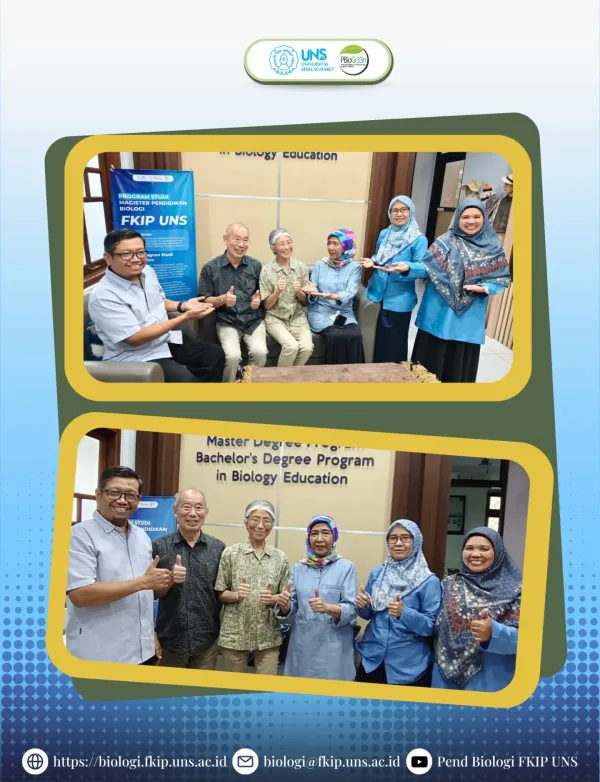
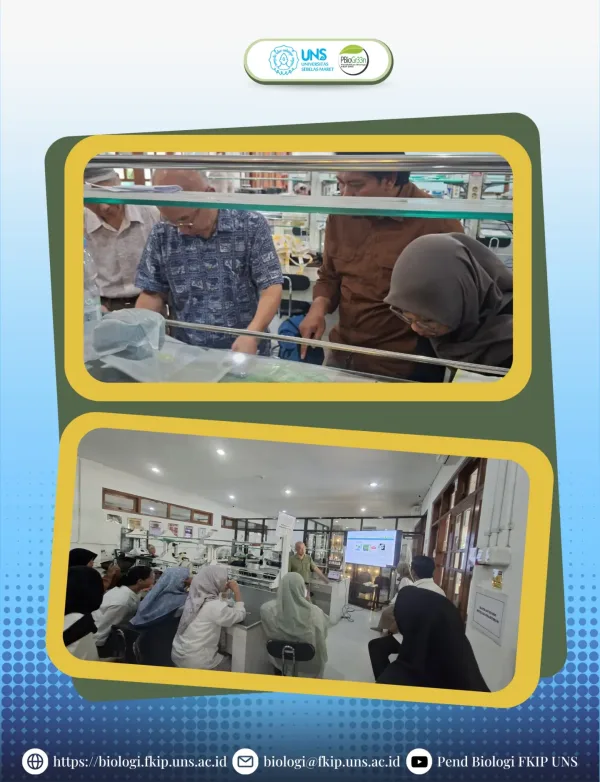
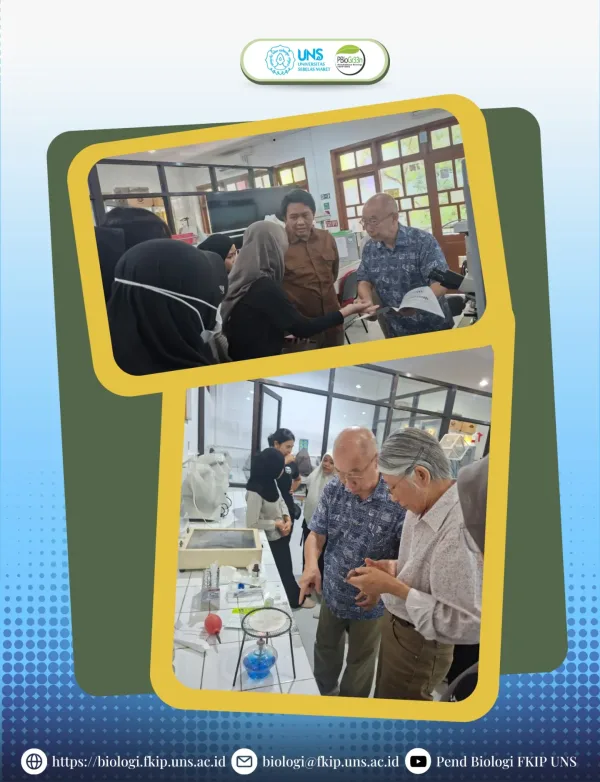
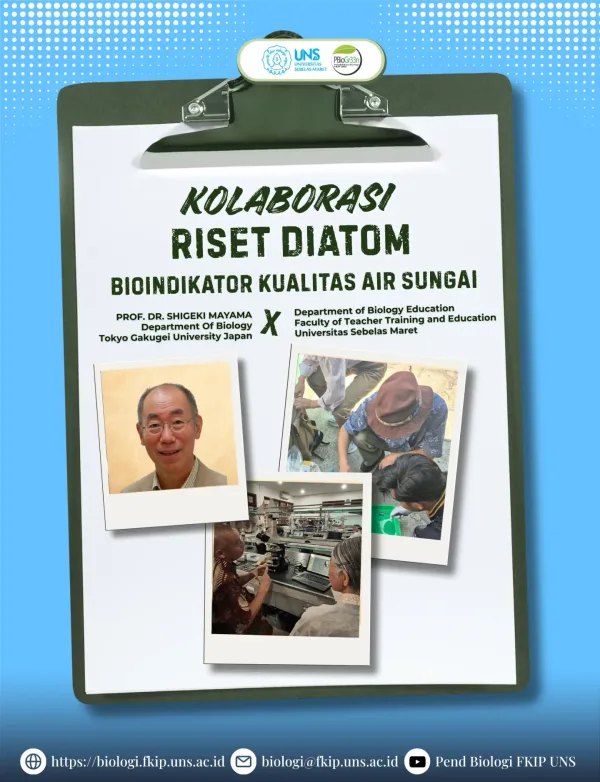
@biologifkipuns 🔬🌿 KOLABORASI RISET DIATOM 2026 🌿🔬 Dari sungai, menuju laboratorium! 🌊🔬 Pada 6–11 Agustus 2026, Pendidikan Biologi FKIP UNS berkesempatan berkolaborasi dalam riset diatom bersama Prof. Dr. Shigeki Mayama dari Tokyo Gakugei University, Jepang 🇯🇵✨ Mulai dari sampling di lapangan, preparasi sampel, hingga identifikasi diatom dilakukan bersama untuk mengenal lebih dekat peran diatom sebagai bioindikator kualitas air sungai. Satu kolaborasi, banyak pengalaman, dan tentunya insight baru dalam dunia riset! 🧪🌱 #Diatom #PendidikanBiologiUNS #BiologiUntukMasaDepan #FKIPUNS #UniversitasSebelasMaret ♬ suara asli – PENDIDIKAN BIOLOGI FKIP UNS



Leave A Comment