

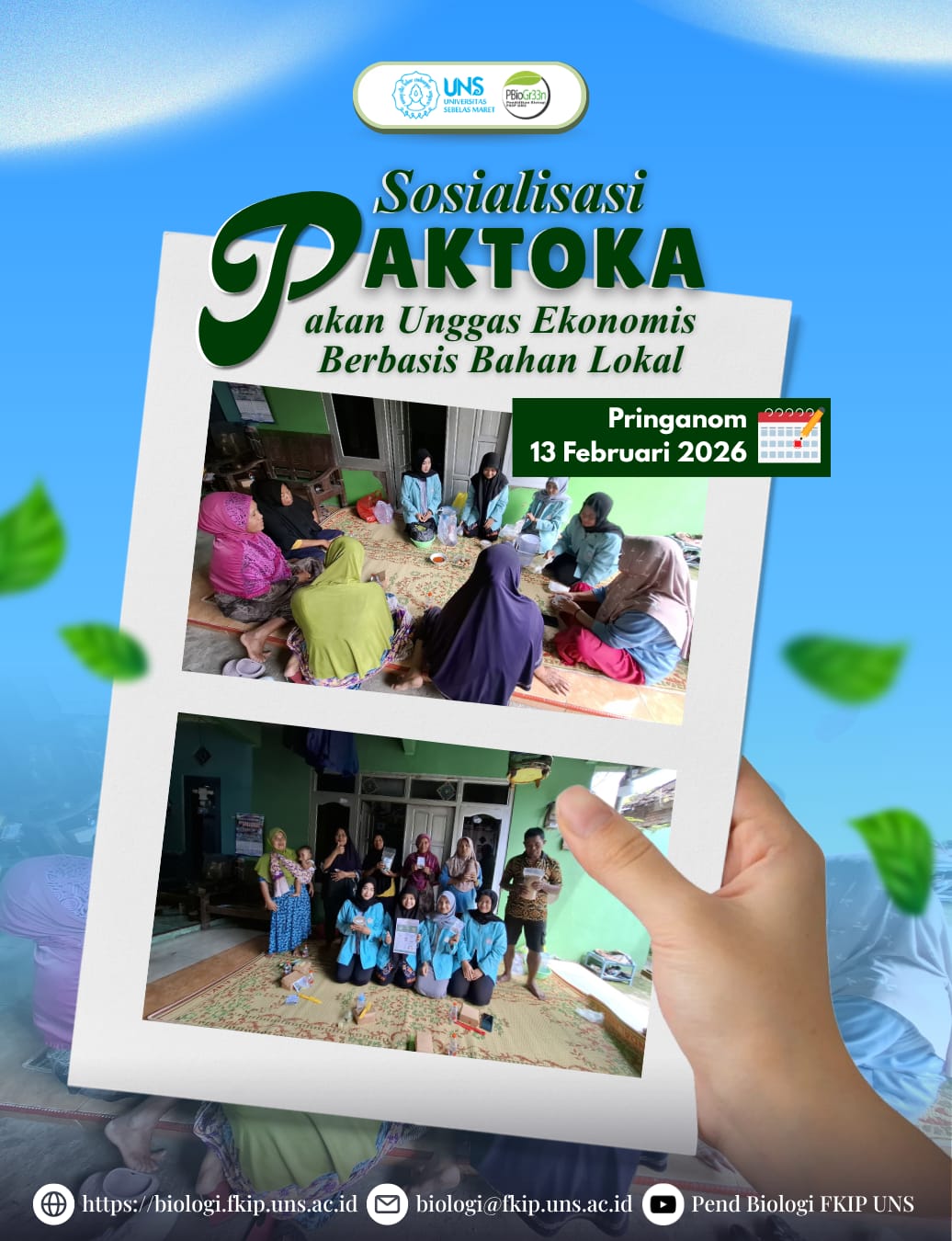
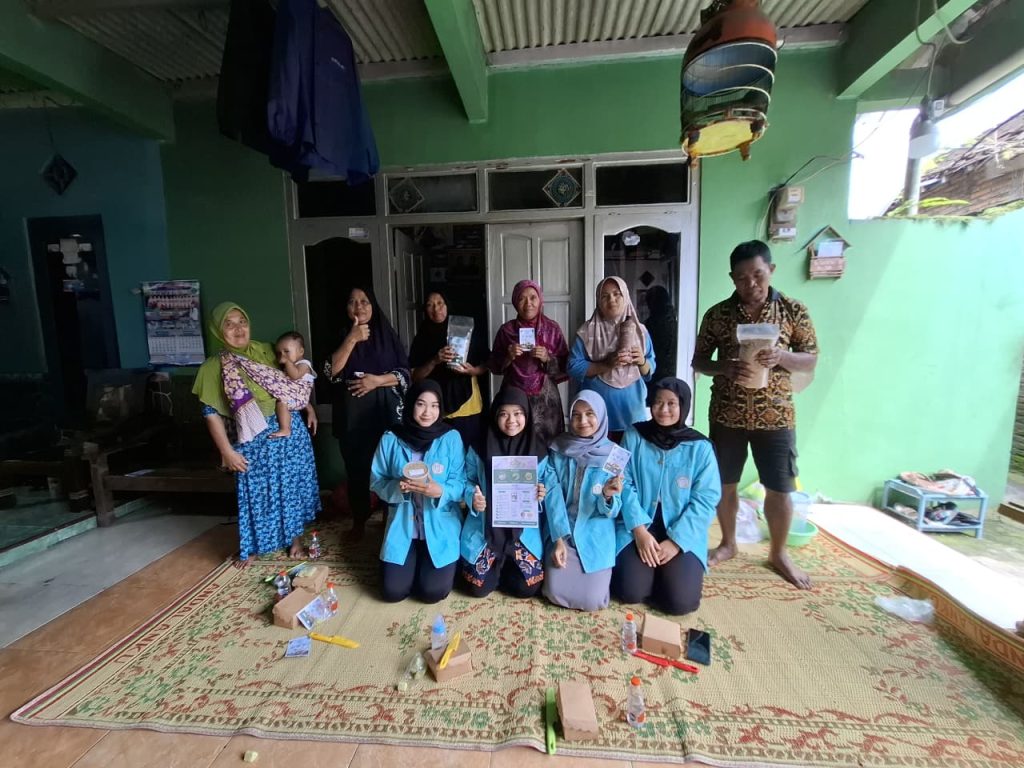
Pringanom, February 13 — Efforts to promote self-sufficiency in poultry feed continue to grow through the utilization of locally available resources. This initiative was reflected in a socialization and hands-on training session on PAKTOKA production, organized by students from Universitas Sebelas Maret in collaboration with the residents of Pringanom Village.
The activity served as an educational platform for the community to explore alternative poultry feed options that are cost-effective, nutritious, and easy to produce independently at home.
Since early morning, the village hall was filled with participants arriving one by one, engaging in friendly conversations before registering. Meanwhile, others curiously observed the neatly arranged materials prepared for the practical session.
During the presentation, the student team explained that PAKTOKA was developed in response to the rising cost of commercial poultry feed. As a solution, they introduced a simple yet effective approach by utilizing locally accessible ingredients.
Participants were introduced to key components of PAKTOKA, including azolla, rice bran, tofu waste, and papaya leaves. Many residents were surprised to learn that azolla contains high protein levels and has significant potential as poultry feed, despite being previously underutilized. Similarly, papaya leaves were highlighted for their benefits in maintaining poultry health when properly processed.
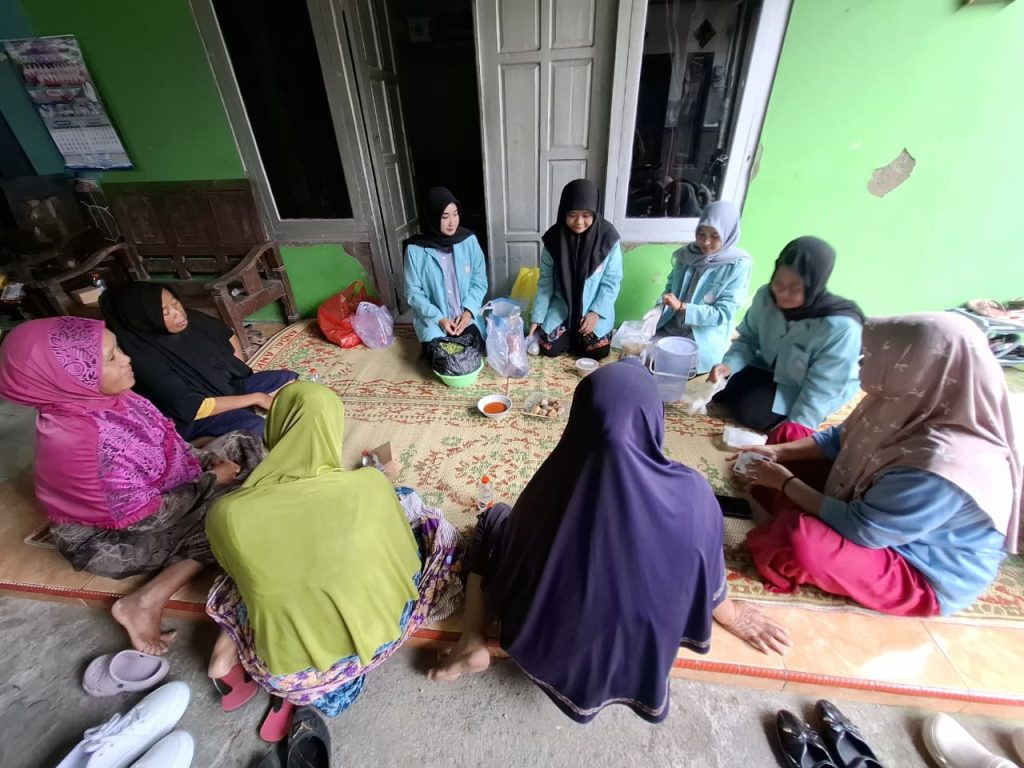
The session became more engaging during the hands-on practice, where participants actively measured, mixed, and processed the ingredients into ready-to-use feed. Laughter and discussion filled the room as residents exchanged ideas and experimented with the mixture under the guidance of the student team.
“It turns out to be simple, and the ingredients are available around our homes,” said Mrs. Siyah, one of the participants, with a smile. Her statement was met with agreement from others, who felt increasingly confident to try making PAKTOKA independently.
The enthusiasm of the participants was also evident during the discussion session. Questions ranged from storage techniques for longer shelf life, feeding frequency, to the potential application for other livestock. This active participation reflected how relevant the program was to the community’s daily needs.
Beyond providing new knowledge, this initiative broadened the community’s perspective on how simple local resources can be transformed into practical solutions for small-scale farming. Through the introduction of PAKTOKA, the residents of Pringanom Village are expected to take a step forward toward more economical, productive, and sustainable poultry farming.





Leave A Comment