

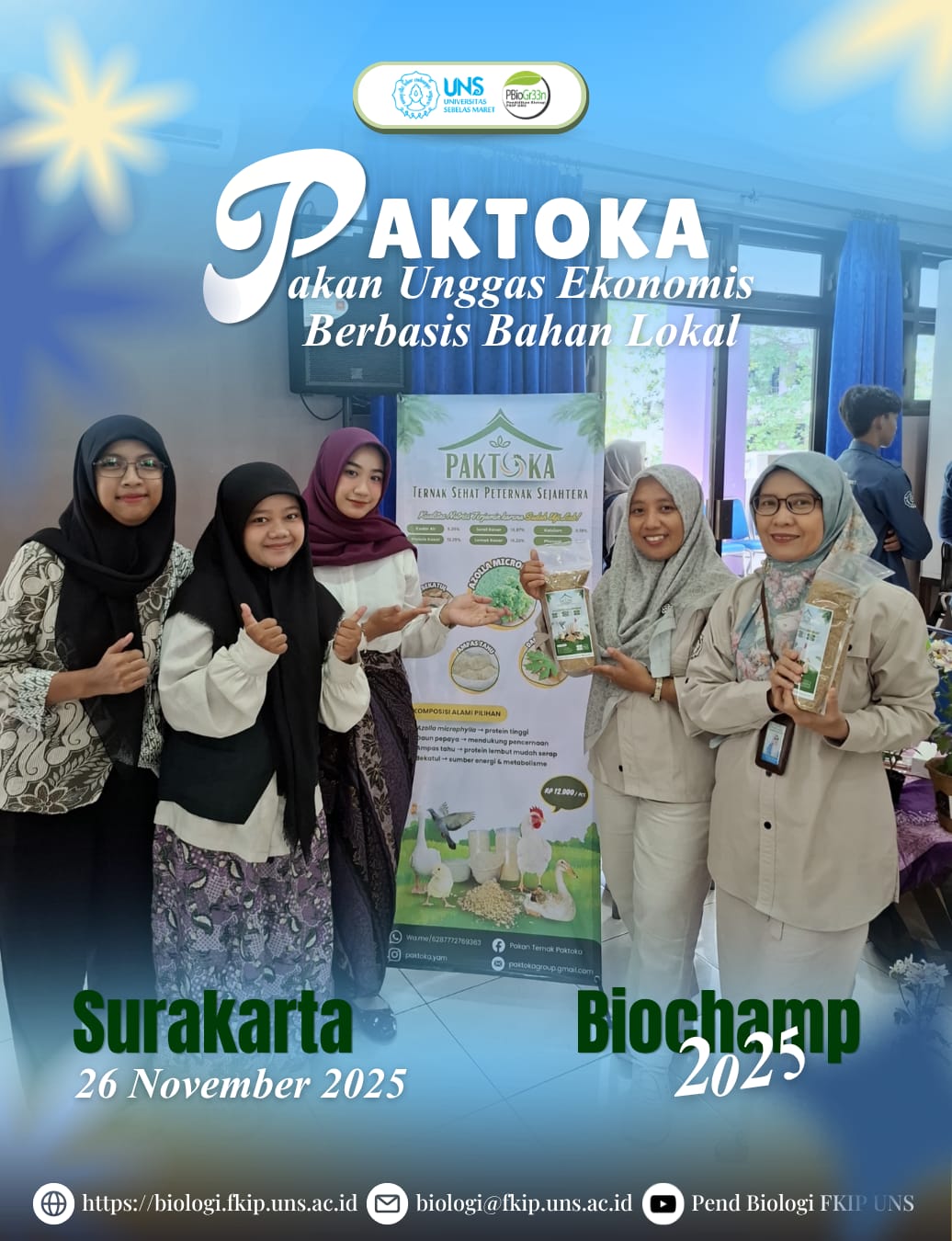
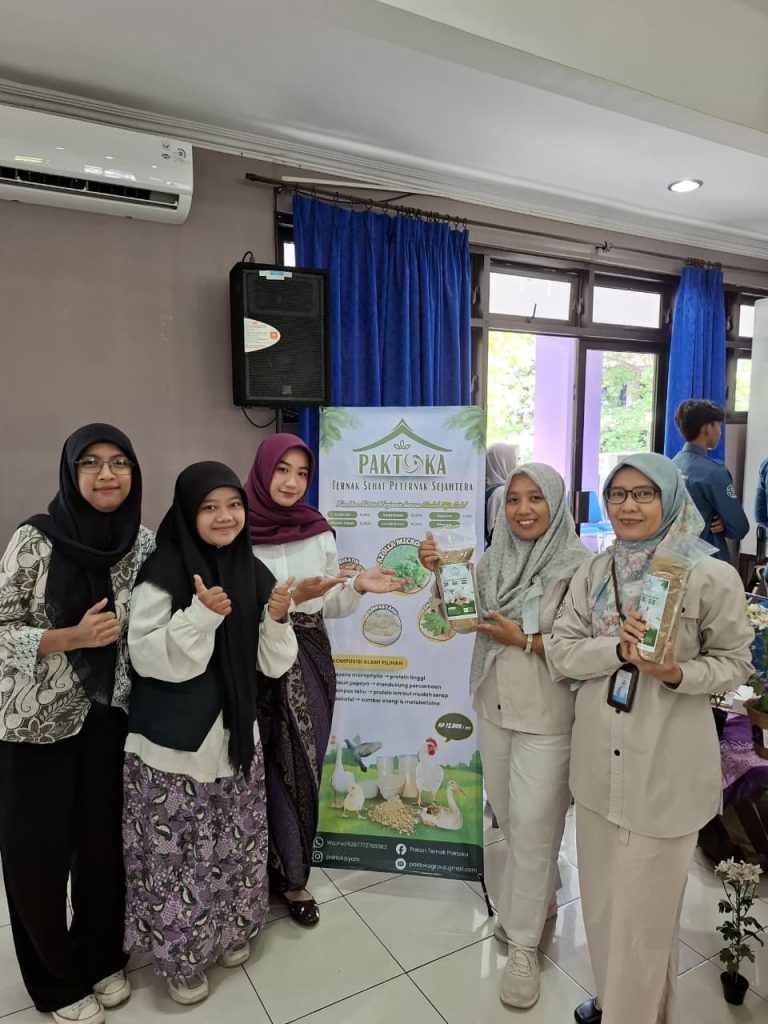
Surakarta, November 26, 2025 — The PAKTOKA poultry feed innovation was featured in the BIOCHAMP 2025 event held at the Hall of Building F, FKIP, Universitas Sebelas Maret. Through this event, the PAKTOKA team introduced a locally sourced poultry feed product to university students as an economical, nutritious, and sustainable alternative.
Since the beginning of the event, the PAKTOKA booth attracted significant attention. Students from various study programs visited the booth, initially out of curiosity, but soon became genuinely interested after learning that PAKTOKA is made from easily accessible local ingredients such as azolla, rice bran, tofu waste, and papaya leaves.
The engagement deepened as the team explained the composition and benefits of each ingredient. Azolla, for instance, was highlighted for its high protein content and potential as an alternative feed source. Rice bran and tofu waste complemented the formulation due to their availability and nutritional value, while papaya leaves captured attention as an underutilized resource with benefits for poultry feed processing.
The session became increasingly interactive, with many students asking questions about ingredient proportions, mixing processes, nutritional content, and the potential application of PAKTOKA in supporting poultry growth. Discussions also expanded to future development opportunities, including research potential and real-world implementation in communities.
One participant noted that PAKTOKA is a compelling innovation because it transforms simple local materials into higher-value products. Such innovations are considered important, not only in addressing the need for affordable feed but also in encouraging students to be more aware of the potential within their surrounding environment.
The presence of PAKTOKA at BIOCHAMP 2025 marked an important step in expanding awareness of locally based poultry feed innovations within the academic community. Beyond product introduction, the activity fostered discussion, curiosity, and a broader perspective that practical solutions in livestock farming can emerge from simple, everyday resources.



Leave A Comment