

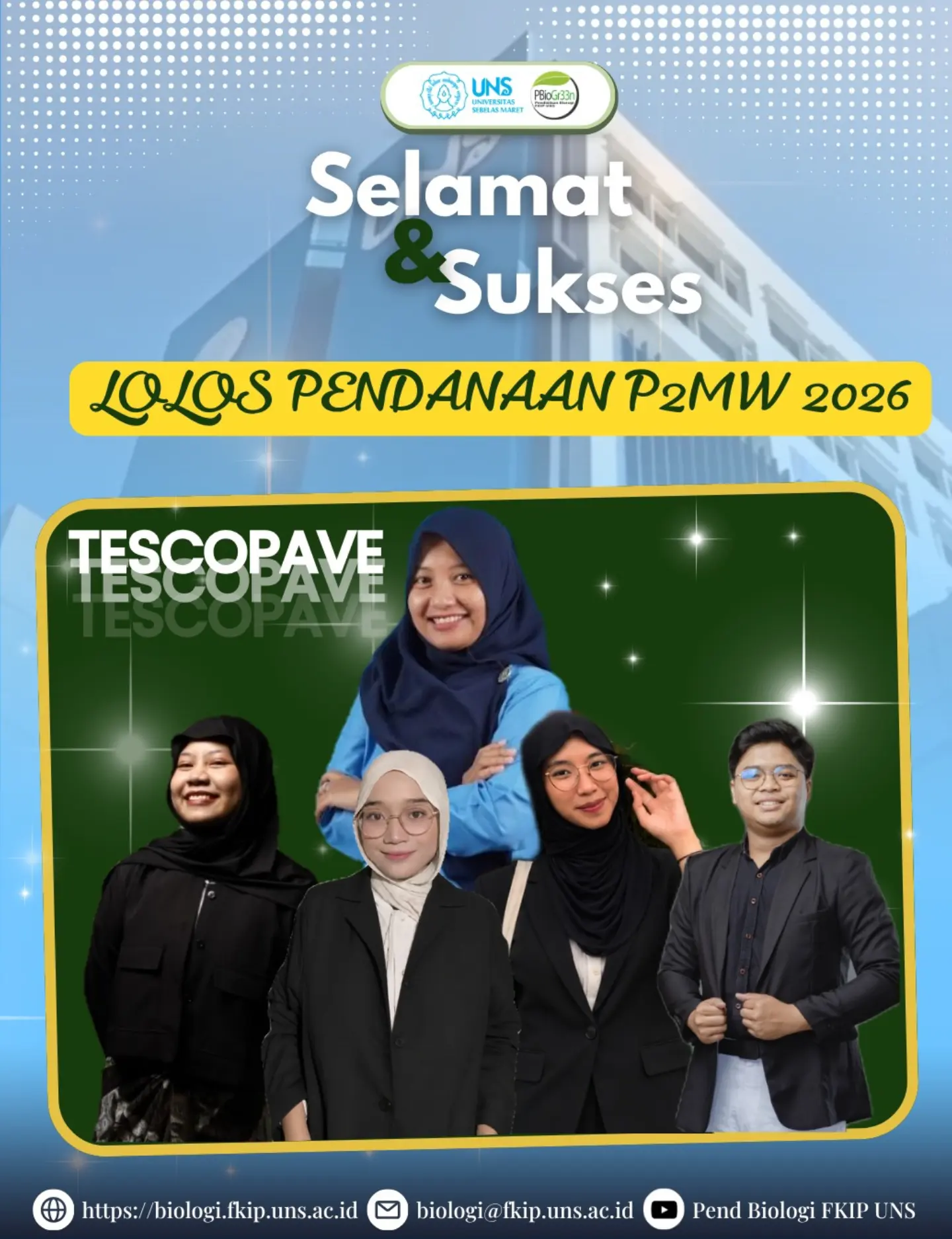
Surakarta, Indonesia — 2026. A student from the Biology Education Study Program, Faculty of Teacher Training and Education (FKIP), Universitas Sebelas Maret (UNS), has achieved a notable accomplishment in the field of student entrepreneurship after the TESCOPAVE team was selected to receive funding through the 2026 Program Pembinaan Mahasiswa Wirausaha (P2MW).
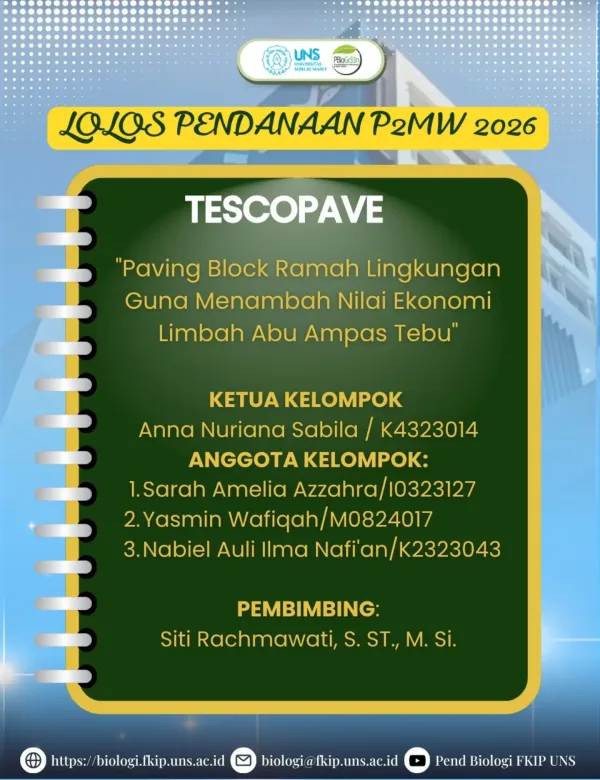
The team, consisting of Anna Nuriana Sabila, Sarah, Yasmin, and Nabiel, developed an innovative eco-friendly paving block made from sugarcane bagasse ash waste. Anna Nuriana Sabila, a student of the Biology Education Study Program at FKIP UNS, represents the program’s growing contribution to student entrepreneurship and innovation in sustainable solutions.
Turning Waste into Sustainable Innovation
TESCOPAVE’s innovation focuses on utilizing sugarcane bagasse ash, an agricultural waste material, as an alternative material in paving block production. The initiative reflects an effort to transform waste into a value-added product while promoting environmentally conscious entrepreneurship.
By integrating environmental awareness with product innovation and business development, the project demonstrates how students can apply scientific knowledge to address real-world environmental challenges. The initiative also highlights the potential of interdisciplinary approaches that connect biology, environmental sustainability, technology, and entrepreneurship.
The achievement is particularly relevant to the Biology Education Study Program’s commitment to developing graduates with diverse professional competencies. In addition to preparing students to become educators and researchers, the program also encourages them to develop entrepreneurial capabilities and create innovative solutions that can generate broader societal impact.
Strengthening Student Entrepreneurship
The 2026 P2MW funding provides an important opportunity for the TESCOPAVE team to further develop and implement its business initiative. Through the program, the students are expected to strengthen their product development, business management, and entrepreneurial skills while continuing to refine the environmental value of their innovation.
The achievement also demonstrates the importance of creating an academic environment that supports students in transforming ideas into tangible innovations. Student entrepreneurship can serve as a bridge between academic learning and practical problem-solving, enabling students to contribute to sustainable development beyond the classroom.
For the Biology Education Study Program, the success of TESCOPAVE represents an achievement in entrepreneurship, one of the key areas reflected in the program’s Program Learning Outcomes (PLOs). The program is committed to preparing graduates who are capable of pursuing careers and contributions as educators, researchers, and entrepreneurs.
The Biology Education Study Program, FKIP UNS, congratulates Anna Nuriana Sabila and the entire TESCOPAVE team on this achievement and extends its appreciation for their commitment to developing an environmentally responsible business innovation.
The team’s success is expected to inspire other students to explore entrepreneurial opportunities, develop innovative solutions, and transform academic knowledge into initiatives that contribute to society and environmental sustainability.
From scientific knowledge to entrepreneurial innovation, Biology Education students continue to demonstrate that academic learning can create meaningful solutions for a sustainable future.



Leave A Comment